
NutriTracker was built from a very real frustration.
I’m Jacob, Founder and Managing Director of NutriTracker, and I’ve been going to the gym on and off for many years. Like a lot of people, I’ve had periods where I was fully locked in, training consistently, eating well, and feeling good, and other times where life got in the way and progress slowed down.

Over the years, I’ve worked with personal trainers, and that gave me a solid foundation. I learned proper form, how to train more effectively, and how to approach the gym with more confidence. That guidance was genuinely valuable, especially in the early stages.
But I kept running into the same problem. I’d have quick, relatively easy questions during the week, the kind of questions that matter in the moment, but feel too small to message someone about. Things like whether I should have 20g of cheese with my lunch, whether I should tweak my calories that day, or whether a session should be pushed back because I was tired. When I did ask, I might not get a response for two or three days. By then, the moment had passed.
That was the gap I wanted to solve.
With the rise of AI, I saw an opportunity to build the kind of tool I wished I had all along. Something that could help track nutrition, workouts, and day-to-day consistency, while also acting like a supportive coach in your pocket. Not for shouting at you. Not for guilt-tripping you. Just for helping you stay on track when real life happens.
That’s why I built NutriTracker.
What NutriTracker is designed to do
NutriTracker brings together the data that actually matters to your progress. It helps you support your nutrition and training, pulls in useful health data from Apple Health on iPhone and Health Connect on Android, and works alongside MyFitnessPal data to give you a more complete picture of what’s going on.
The goal is simple: make it easier to stay accountable, make better decisions, and keep moving forward.
Whether you’re trying to lose body fat, build better habits, improve consistency in the gym, or just stop second-guessing every small decision, NutriTracker is built to give you practical support without the usual faff.
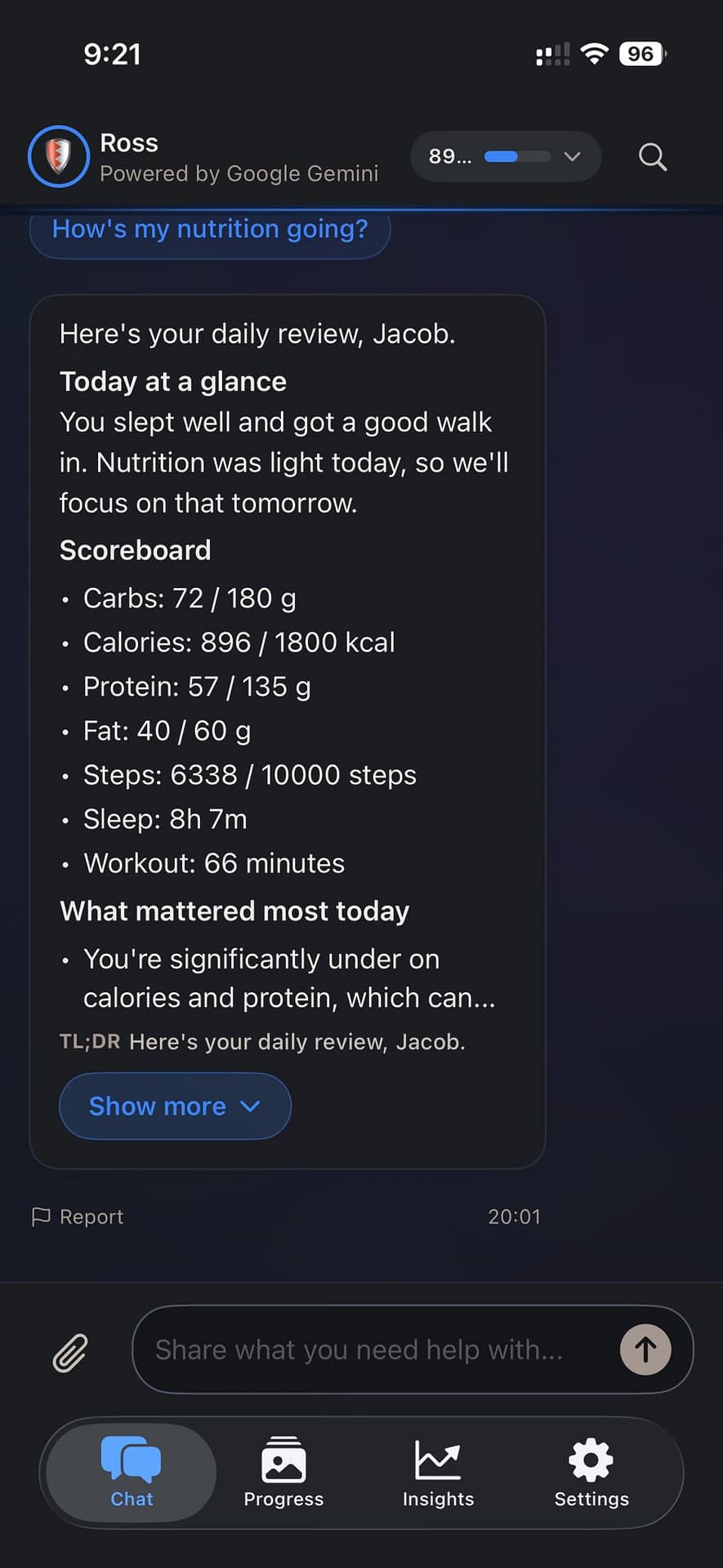
Daily coaching review
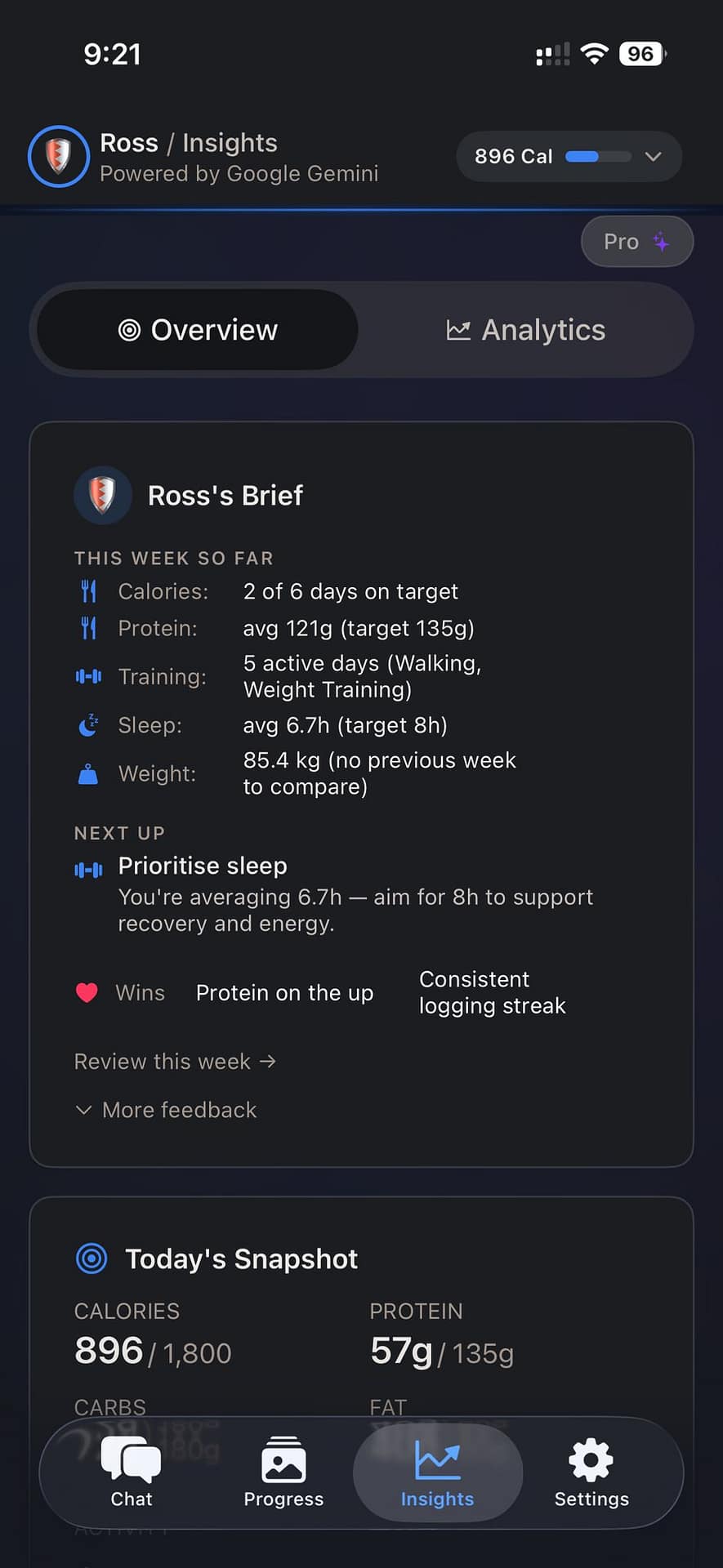
Weekly insights brief
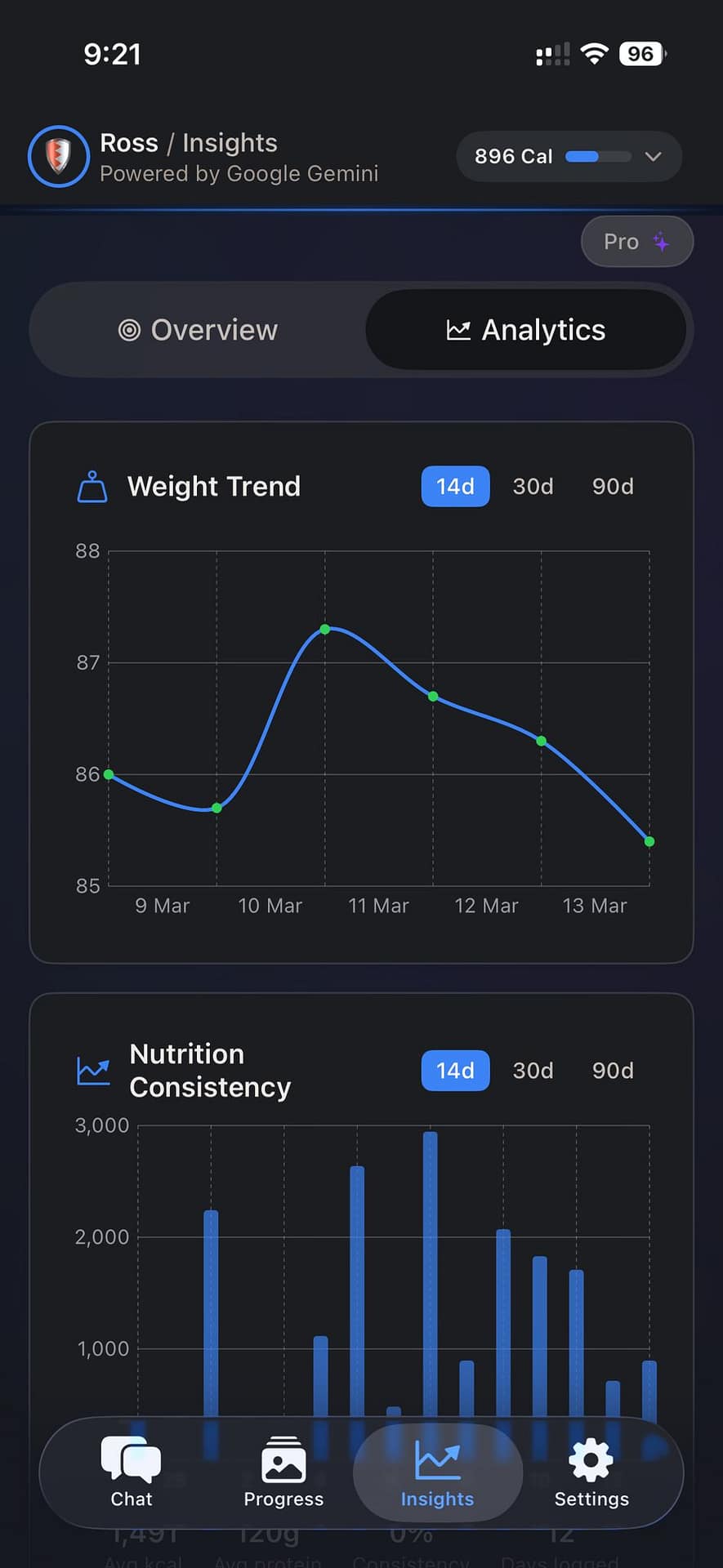
Progress analytics
Built from real use, not just ideas
NutriTracker hasn’t just been designed in theory. It’s something I use myself.
Since building NutriTracker, I’ve already lost 5kg during my cut, and I’m continuing to train throughout it to build a body I can feel genuinely proud of. That matters to me, because I didn’t want to build something that sounded good on paper but didn’t actually help in real life. I wanted to build something useful enough that I’d rely on it too.
Every feature is shaped around that idea: practical coaching, better visibility, less friction, and support that feels helpful when you need it most.
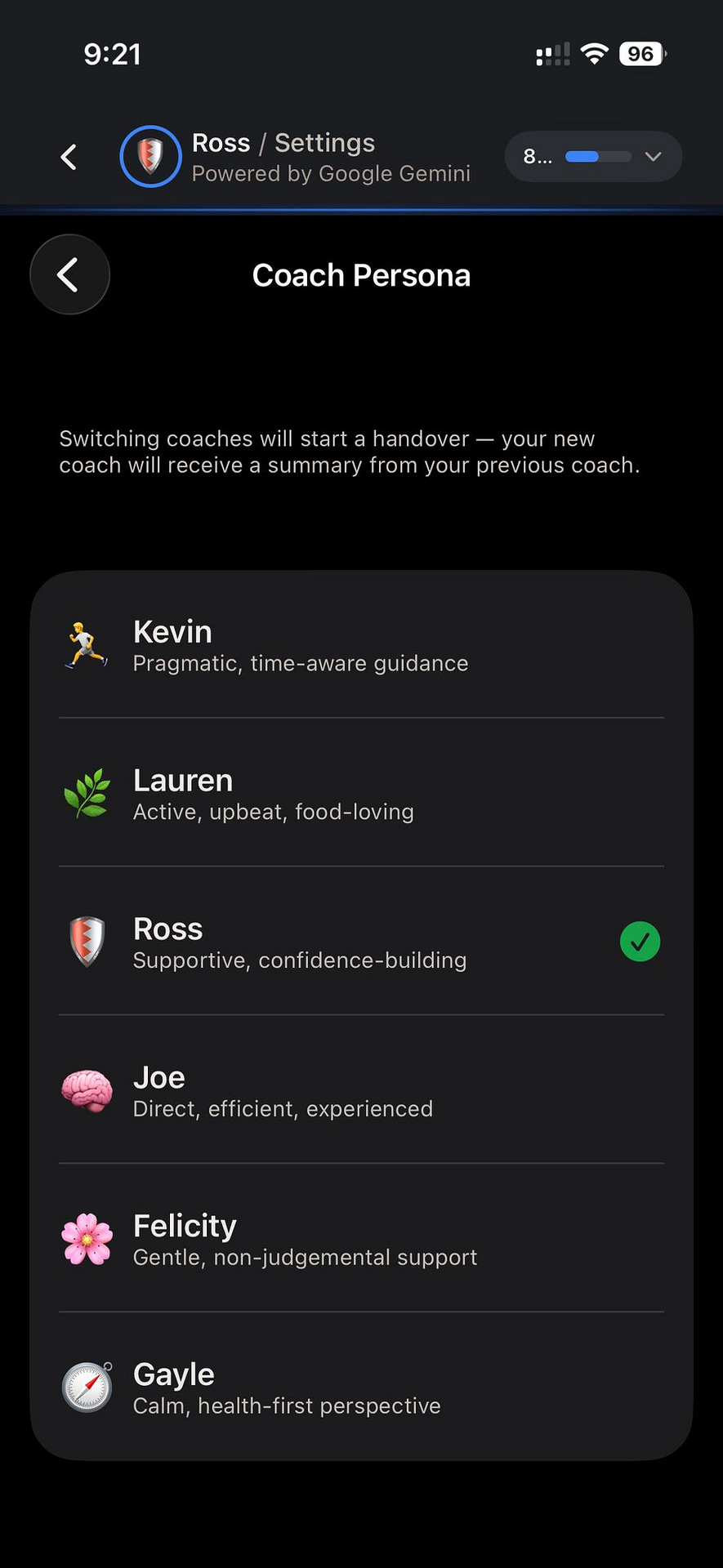
Choose your coach
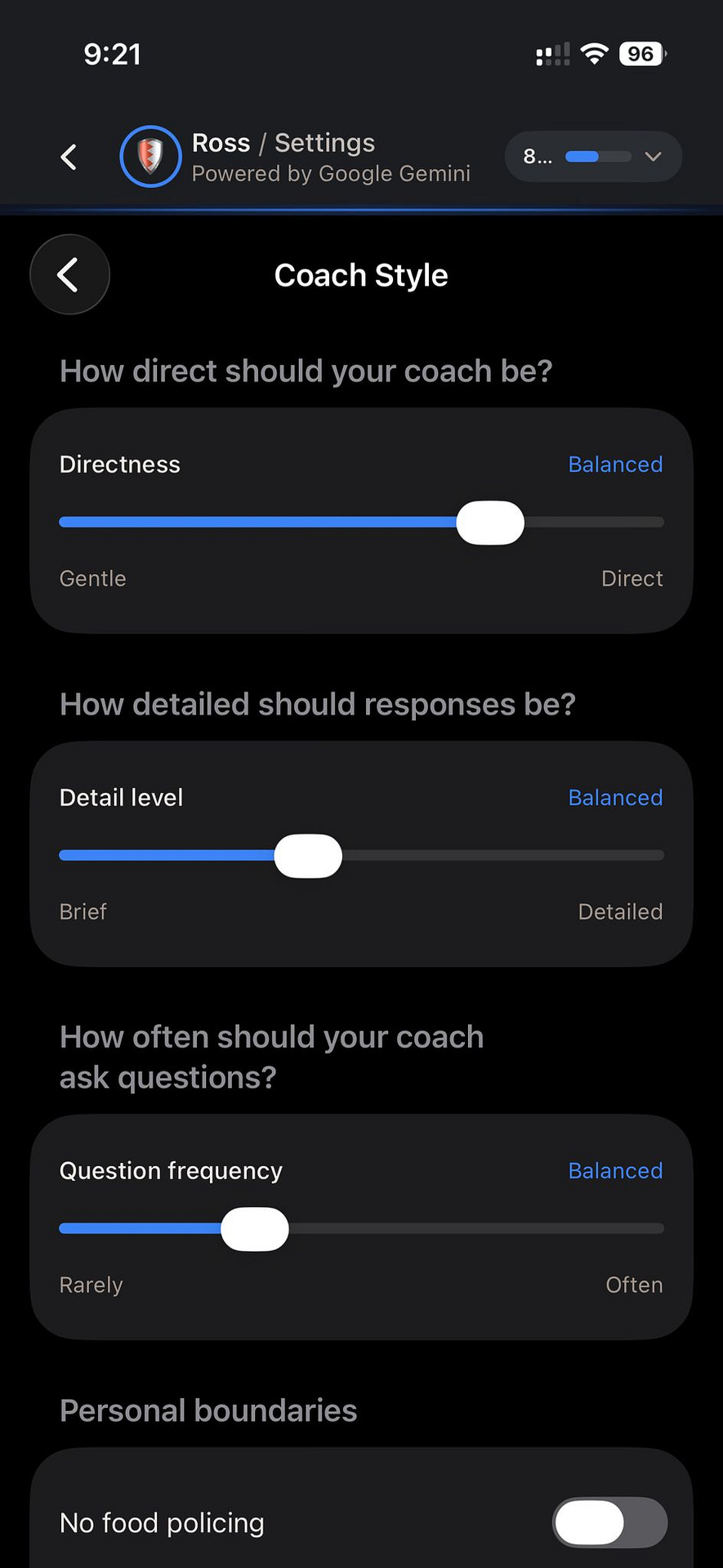
Customise your coaching style
What NutriTracker is not
NutriTracker is not a replacement for a qualified personal trainer, coach, dietitian, or medical professional.
If you’re completely new to the gym, unsure about exercise form, dealing with injuries, or need specialist support, working with a real professional is still incredibly important. Personal trainers can give you hands-on coaching, technique correction, and personalised support that a software simply cannot replace.
NutriTracker is built for people who already have some of those foundations in place and want extra support staying consistent. It’s for people who know the basics, but still benefit from nudges, accountability, clearer data, and fast answers to everyday questions that can otherwise throw them off course.
How we approach AI coaching safety
NutriTracker coaches are built around a set of product-level guardrails designed to keep coaching useful without overstepping. Here is how that works in practice:
- Coaches never claim medical authority. NutriTracker coaches are AI assistants, not doctors, dietitians, or physiotherapists. The product is designed to help you think, ask better questions, and make more informed decisions — not to diagnose or prescribe.
- Coaches defer to qualified professionals. When a conversation touches injury, illness, mental health, eating difficulties, or clinical nutrition, coaches are designed to recommend professional support rather than advise directly.
- Guardrails around weight and restriction language. Coaches are built to avoid harmful weight-loss framing, extreme restriction guidance, and diet culture pressure. The product is designed to feel encouraging, not judgemental.
- Personalisation over generic advice. Coaching is only as useful as the context behind it. Coaches are designed to gather information through conversation, use real health data where available, and build understanding over time — rather than giving one-size-fits-all answers.
- Transparent uncertainty. When a coach does not have enough information to give a useful answer, it says so — rather than filling the gap with generic guidance.
Our editorial approach
The content on NutriTracker.io — including blog posts, landing pages, comparisons, and guides — is produced by the NutriTracker team, led by Jacob Eells (Founder). Content decisions are based on the following principles:
- First-hand product experience. Jacob and the team use NutriTracker daily. Content reflects real observations, not theoretical ones.
- Competitive and category research. Comparisons and category guides are based on direct product use, App Store research, and observed category trends — not on press releases or marketing materials.
- Honest positioning. Where NutriTracker is discussed in our own content, we flag that we are a participant in the AI coaching category, not a neutral third party. See our Best AI Coaching Apps 2026 guide for an example of how we handle this in practice.
- No sponsored content or paid placements. NutriTracker does not accept payment for editorial coverage, rankings, or recommendations on this site.
- Content is reviewed before publication. Pages and posts are reviewed by at least one team member before going live to check accuracy, tone, and that health-adjacent claims are appropriately caveated.
About the reviews and testimonials on this site
The reviews and testimonials displayed on NutriTracker.io are from early users and beta testers who used the product during development and the initial launch period. They were collected through direct feedback, App Store reviews, and follow-up conversations with users who agreed to share their experience.
We have not paid for, incentivised, or artificially generated any review or testimonial. Where users are identified by first name and initial only, this reflects their preference for privacy. Where a first name only is used (e.g., Jacob), the testimonial is from a named user who consented to its use in that form.
As NutriTracker grows its user base, we will continue to update testimonials and add verified App Store reviews where available.
Our mission
Our mission is to make nutrition and fitness support feel more accessible, more practical, and more human.
We believe most people do not need more shame, more complexity, or another generic plan they will abandon after a week. They need clarity. They need consistency. They need a partner that helps them understand what is happening, stay accountable, and make the next good decision.
That’s what NutriTracker is here to do.
One better choice at a time.
Ready to try NutriTracker?
Start coaching free on the web, or download NutriTracker on iPhone or Android.
Need help? Visit our help centre. For editorial or press enquiries, contact us at hello@nutritracker.io.