The AI coaching category is growing fast. In 2026, there are more options than ever for people who want personalised fitness and nutrition guidance through AI. But not all AI coaching apps are built the same — and some are better at marketing than actual coaching.
Here is an honest look at what the best AI coaching apps should offer, what to watch out for, and how to choose the right one for you.
What makes a good AI coaching app?
Before comparing specific apps, it helps to know what separates useful AI coaching from a glorified chatbot. Here are the features that actually matter:
1. Coaching memory
A good AI coach should remember your goals, your preferences, and what you discussed last session. If you have to repeat yourself every time, it is a chatbot wearing a coaching hat. Look for apps that explicitly advertise persistent memory across conversations.
2. Personalised, not generic
The whole point of a coach is personalisation. If the app gives the same advice to everyone regardless of their goals, experience, and data, it is not coaching — it is a content generator. The best apps use your health data (steps, sleep, nutrition, workouts) to make recommendations specific to you.
3. Available on your phone
Coaching is most useful when it is with you. A web-only tool cannot send push notifications, integrate with Apple Health or Health Connect, or be there when you need a quick answer at the gym. The best AI coaching apps are available on iPhone, Android, and the web.
4. Multiple coaching styles
Not everyone responds to the same coaching tone. Some people want blunt efficiency. Others want gentle encouragement. The best apps recognise this and offer different coaching approaches rather than a one-size-fits-all personality.
5. Transparent pricing
You should know exactly what you are paying and what you get. Be wary of apps that advertise “no tiers” but have plan switching in their settings, or that hide essential features behind upsells after you sign up.
6. Health data integration
Integration with Apple Health (iPhone), Health Connect (Android), and nutrition tracking apps like MyFitnessPal makes coaching recommendations specific rather than generic. Without real data, an AI coach is guessing.
What to watch out for
The AI coaching space has some common pitfalls:
- Impressive marketing, unstable product. Some apps have brilliant messaging and positioning but crash, show server errors, or have broken sign-up flows. Always test the actual product before committing.
- Promises that cannot be verified. Claims like “learns from every user” or “collective intelligence” sound compelling but are nearly impossible to verify, especially for new apps with small user bases.
- “No tiers” that has tiers. Some apps advertise no subscription tiers but actually offer monthly vs annual pricing or plan switching. Read the terms, not just the marketing.
- Form-based onboarding pretending to be coaching. A 12-screen questionnaire followed by a generic plan is not coaching — it is a quiz with a chatbot attached. Real coaching builds understanding over time through conversation.
- Web-only with no mobile apps. If an AI coaching app does not have native iOS and Android apps, it cannot integrate with your health data, send push notifications, or be with you when you need it most.
How NutriTracker fits in
In the interest of transparency: this blog is published by NutriTracker, so we are not a neutral observer. Here is what we offer and where we think we stand honestly:
What NutriTracker does well
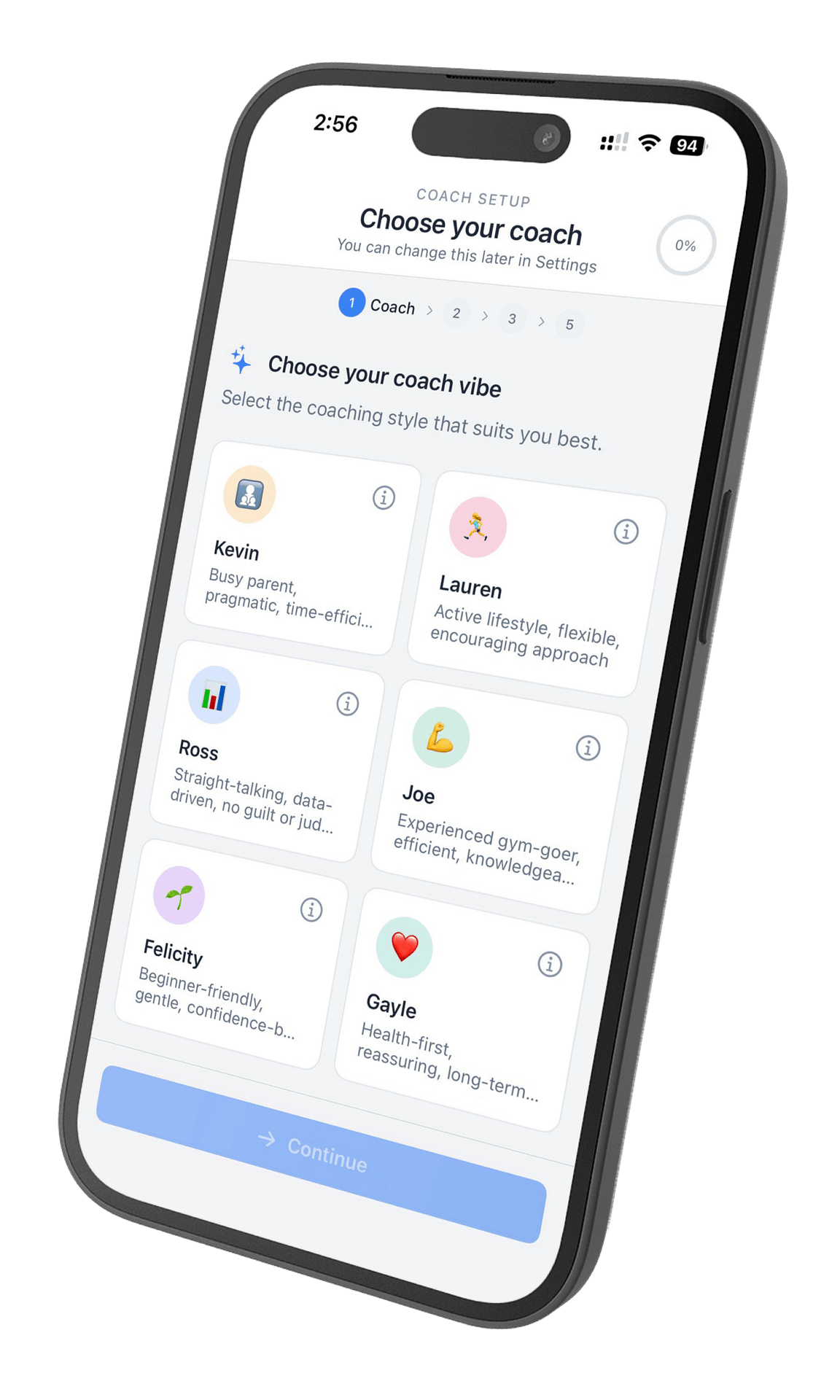
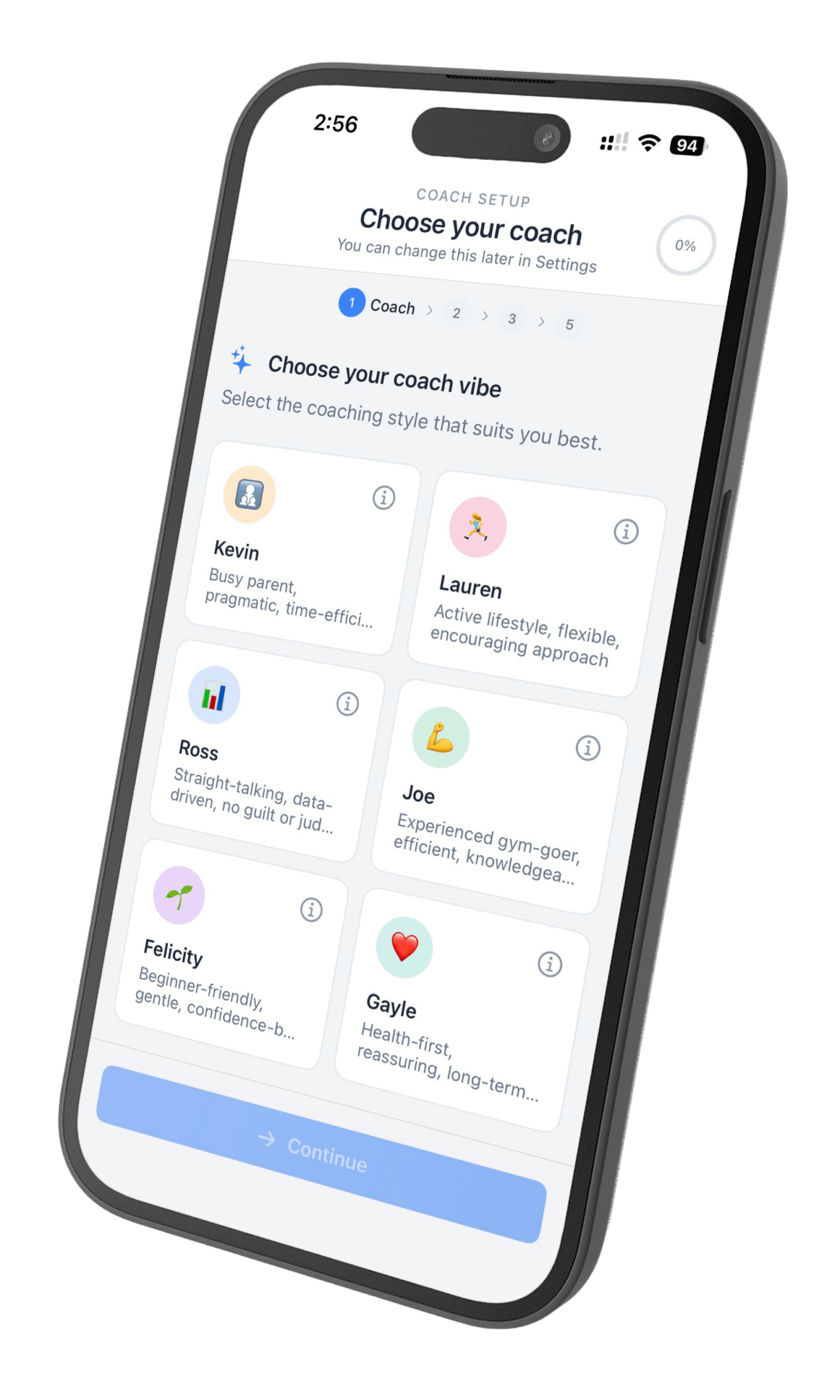
- Six coaching personalities. Kevin, Lauren, Ross, Joe, Felicity, and Gayle each have a distinct tone and approach. This is unusual in the category — most AI coaching apps offer one voice.
- Three platforms. Native apps on iPhone and Android, plus a full web experience. Coaching history syncs across all devices.
- Health data integration. Apple Health, Health Connect, and MyFitnessPal. Your coach uses real data to make specific recommendations.
- Coaching memory. Persistent memory across sessions. Your coach remembers your goals, preferences, and what you discussed.
- Daily and weekly reviews. Proactive coaching that reviews your day and week without you having to ask.
- Conversational onboarding. Your coach gets to know you through conversation, not a multi-screen form.
Where NutriTracker is still growing
- Early stage. NutriTracker launched recently and is still building its user community. We do not have thousands of reviews yet.
- No calendar integration. Some competitors offer Google Calendar integration for auto-adapting training around travel. We do not have this yet.
What to look for in 2026
The AI coaching category is evolving quickly. Here are the trends worth watching:
- Memory is becoming table stakes. Users expect AI tools to remember context. Apps that do not offer persistent memory will fall behind.
- Multi-platform is essential. Web-only AI coaching tools will struggle as users expect mobile-native experiences with health data integration.
- Coaching quality matters more than features. A long feature list means nothing if the coaching output is generic. The best apps will be the ones where the AI actually gives useful, specific, personalised guidance.
- Transparency wins trust. As more AI coaching apps launch, the ones that are honest about their capabilities and limitations will build stronger user relationships than those that overpromise.
How to choose
The best AI coaching app for you depends on what you need. Here is a simple framework:
- Try the free tier or trial. Most AI coaching apps offer some form of free access. Use it. Actually have a conversation and see if the coaching feels useful.
- Check the platforms. If you use an iPhone, make sure the app has a native iOS app with Apple Health integration. Same for Android and Health Connect.
- Test the memory. Come back a day later and see if the coach remembers what you discussed. If it does not, it is a chatbot, not a coach.
- Read the pricing carefully. Understand what you get for free vs paid. Check whether features you care about are behind a paywall.
- Trust your experience over marketing. Clever copy and a slick landing page do not mean good coaching. The product experience is what matters.
If you want to try NutriTracker, you can start free or download on iPhone or Android. See how it works.