
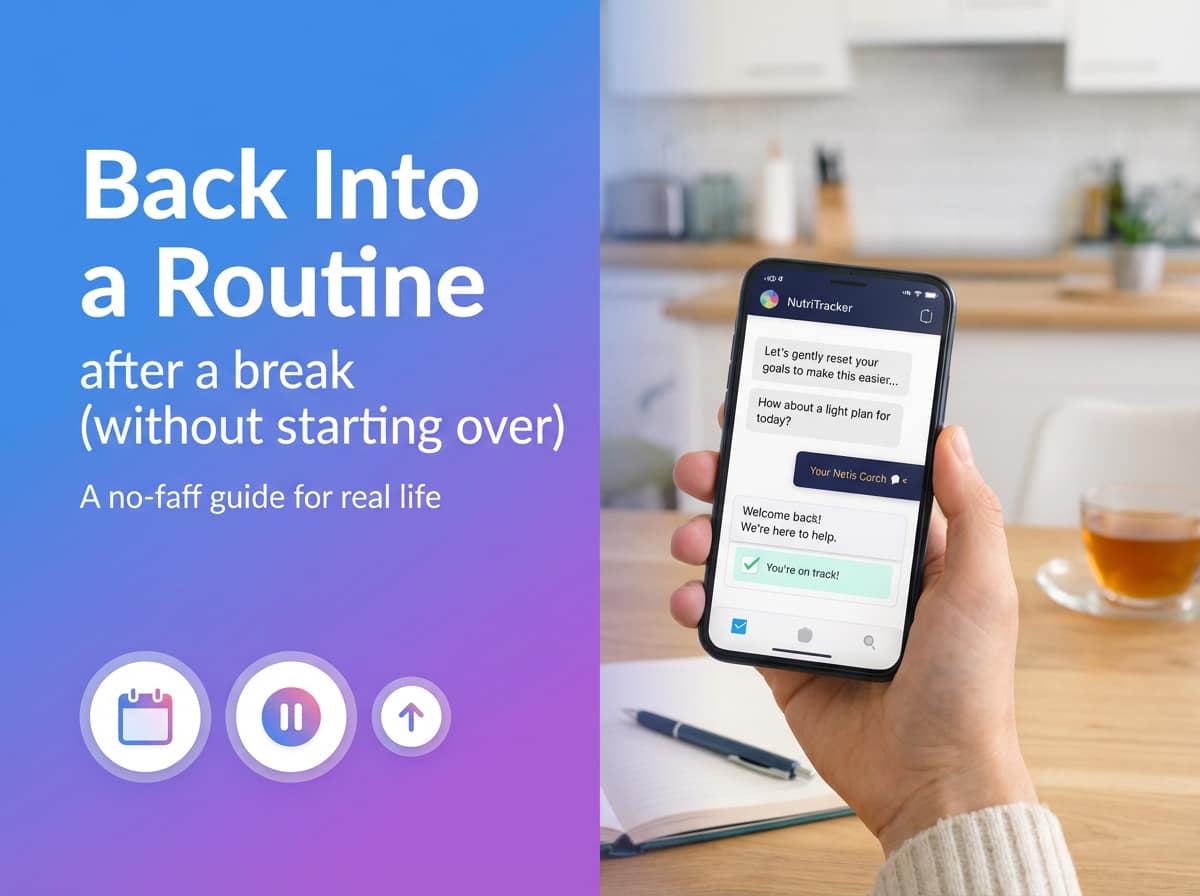
You have not lost everything. It just feels that way.
Whether it has been two weeks or two months, getting back into a fitness routine after a break always feels harder than it should. The gap between where you were and where you are now seems enormous. The temptation is to either overhaul everything at once or keep putting it off because the mountain looks too big.
Here is the thing: you are not starting from zero. Your body remembers more than you think. Your habits are not gone, they are dormant. And the path back does not need to look anything like the path that got you here in the first place.
Why breaks happen (and why they are normal)
Before we talk about getting back, let us normalise the break itself. People fall out of routines for completely valid reasons:
- Illness or injury
- Work pressure or long hours
- Family commitments or caring responsibilities
- Moving house, changing jobs, or other life transitions
- Mental health dips or plain exhaustion
- Holidays that turned into longer time off
None of these are failures. They are life. The only actual problem is if you treat the break as evidence that you are not cut out for this. You are. You just need a sensible re-entry plan.
The biggest mistake: trying to pick up where you left off
If you were running 5K three times a week before your break, do not go out and try to run 5K on day one. If you were squatting 80kg, do not load 80kg on the bar. If you were eating a precise meal plan, do not try to reinstate it overnight.
Your fitness has not disappeared, but it has declined. Your tolerance for volume and intensity has dropped. Your routine muscles (the habits that got you to the gym in the first place) have weakened. Trying to jump back to your previous level is the fastest route to soreness, discouragement, and another break.
The re-entry framework: three phases
Phase 1: Just show up (Week 1 to 2)
The only goal in the first week or two is to rebuild the habit of doing something. Not the perfect thing. Something.
- Training: Two to three sessions at about 50 to 60 percent of your previous effort. Shorter sessions. Lower weights. Easier pace. The point is movement, not performance.
- Nutrition: Focus on one thing. Maybe it is eating a decent breakfast. Maybe it is having protein with every meal. Do not overhaul your entire diet on day one.
- Mindset: Your only metric this week is “did I do something?” If yes, it was a good day.
Phase 2: Build rhythm (Week 3 to 4)
Now you have some momentum. This is where you start to add structure, but still gently.
- Training: Move to three or four sessions. Start increasing intensity gradually. Add a bit more weight, a bit more distance, a few more minutes. Aim for about 70 to 80 percent of where you were before.
- Nutrition: Add a second focus area. If week one was about breakfast, maybe now you also plan dinners. Still not trying to be perfect across every meal.
- Mindset: Start noticing what is working. What times of day suit you? What meals are easy wins? What sessions do you actually enjoy? Build around those.
Phase 3: Settle into your new normal (Week 5 onwards)
By week five, you should have a rhythm that feels manageable. Not your old routine reheated, but a routine that fits who you are right now, with the schedule and energy you currently have.
- Training: Full sessions at your new appropriate level. This might be close to where you were before, or it might be a bit below. Both are fine.
- Nutrition: A general pattern you can repeat most days without needing to think too hard about it.
- Mindset: You are no longer “getting back into it”. You are just doing it.
What to do about the fitness you lost
Good news: muscle memory is real. Research consistently shows that previously trained muscles regain strength and size faster than untrained muscles building from scratch. If you had a solid base before your break, you will get back to your previous level faster than you expect.
Cardiovascular fitness also recovers relatively quickly with consistent work. You might feel out of breath in week one, but most people are surprised by how fast their endurance comes back once they start moving again.
The key word is consistent, not intense. Moderate effort, done regularly, beats sporadic heroic sessions every time.
Practical tips for the first two weeks
Lower the bar dramatically
Your re-entry sessions should feel almost too easy. If you finish thinking “I could have done more”, that is perfect. You want to build positive associations with training again, not crawl home wondering why you bothered.
Do not weigh yourself immediately
Your weight after a break is not useful information. Water retention, food volume, and muscle glycogen shifts mean the number will be higher than your “normal”, and that can be demoralising for no good reason. Give it two or three weeks before you look at the scales, if you use them at all.
Tell someone
Accountability does not need to be a formal arrangement. Just telling a friend, partner, or coach that you are getting back into things makes it more real. It also means someone will ask you how it is going, which is a gentle nudge that costs nothing.
Remove decisions
Decision fatigue kills re-entry. Lay out your gym clothes the night before. Have a default meal you can make in 15 minutes. Pick a fixed time for your sessions. The fewer decisions you need to make, the more likely you are to follow through.
Accept that it will feel awkward
The first session back will feel strange. You will feel weaker than you remember. The gym might feel unfamiliar if you have been away a while. That is normal and it passes quickly. By session three or four, it starts to feel like yours again.
What about your old plan?
If you had a structured programme before your break, you might be tempted to just restart it from week one. That can work, but consider whether the plan still fits your current life. Often, the reason a routine broke down was not just the triggering event (illness, holiday, stress). It was that the routine was already a bit too ambitious for the long haul.
Coming back from a break is actually a great opportunity to build something more sustainable. Ask yourself:
- How many sessions can I realistically do every week, even on my busiest weeks?
- What kind of training do I actually enjoy?
- What meals can I prepare consistently without it feeling like a chore?
- What would a minimum viable week look like for me?
Build your new routine around honest answers to those questions, and it will last longer than the old one did.
A note on guilt
If you are carrying guilt about the break, let it go. Guilt does not improve performance. It does not build muscle or improve nutrition. All it does is make the idea of starting again feel heavy and punishing.
You took a break. Now you are coming back. That is the whole story. No penance required.
The bottom line
Getting back into a routine after a break is not about willpower, punishment, or dramatic fresh starts. It is about:
- Starting smaller than you think you need to
- Building rhythm before intensity
- Designing a routine that fits your current life, not your ideal one
- Being patient with the process while your body catches up
You have done this before. Your body remembers. The only thing you need to do now is begin, gently.
If you want a coach that helps you get back on track without the pressure of starting from scratch, NutriTracker (web · iPhone · Android) is built for exactly this. It meets you where you are and helps you build from there, one conversation at a time.