The best AI fitness coach app is one that gives personalised coaching, adapts to your routine, remembers your goals, supports both workouts and nutrition, and helps you stay consistent when real life gets messy. A good AI fitness coach should do more than create generic workout plans. It should help you make better decisions, recover from off-days, and build habits you can actually keep.
Quick answer
Choose an AI fitness coach app by looking at whether it can support the real reasons consistency breaks: time, energy, food choices, motivation, and changing routines. NutriTracker is designed around chat-first coaching across food, fitness, habits, and real life.
When choosing the best AI fitness coach app, look for:
- Personalised coaching based on your goals
- Memory across conversations and check-ins
- Workout guidance that adapts to your routine
- Nutrition support without obsessive tracking
- Health data integration where useful
- Support for consistency, habits, and recovery
- A coaching style that feels motivating, not judgemental
Most fitness apps give you plans. Fewer actually coach you.
There are a lot of fitness apps now. Some track workouts. Some count calories. Some give you training plans. Some show you graphs that look impressive until you realise you still have no idea what to do on a random Wednesday when you are tired, hungry, and considering calling a packet of biscuits “dinner”.
That is where an AI fitness coach app can be useful.
The best AI fitness coach app should not just give you a plan and leave you to get on with it. It should help you adjust, understand what matters, and keep going when your week does not look like a motivational Instagram reel.
Because fitness is not just about knowing what to do. Most people know the basics. Move more. Eat better. Lift something occasionally. Sleep more than four hours if possible. The hard part is staying consistent when life gets busy.
What is an AI fitness coach app?
An AI fitness coach app is a digital coaching app that uses artificial intelligence to provide personalised support around workouts, nutrition, habits, progress, and consistency.
A basic fitness app might give you a workout plan. A tracking app might record what you did. An AI fitness coach should go further by helping you understand what to do next.
That could include:
- Adjusting a workout when you are short on time
- Helping you get back on track after missing sessions
- Suggesting realistic nutrition habits around your goals
- Using activity or health data as useful context
- Remembering your preferences, struggles, and routine
- Helping you build consistency without relying on perfection
The difference is simple: a tracker records behaviour. A coach helps shape behaviour.
What makes the best AI fitness coach app?
The best AI fitness coach app depends on what you need. Some people want strength programming. Some want weight loss support. Some want help with food. Some want a coach that can help them stop restarting every Monday.
But the strongest AI coaching apps tend to have the same core qualities.
1. It should personalise advice to your actual life
Generic plans are easy to create. Useful plans are harder.
A good AI fitness coach should understand your:
- Fitness goal
- Current routine
- Available time
- Training experience
- Food preferences
- Motivation style
- Barriers and patterns
Advice for someone training four times a week should not be the same as advice for someone trying to restart after six months of doing absolutely nothing apart from occasionally carrying the shopping in one trip.
Personalisation matters because the best plan is not the most impressive one. It is the one you can actually follow.
2. It should remember your goals and context
Memory is one of the biggest differences between a basic AI chat tool and a proper AI coaching experience.
If you have to explain your goals, preferences, injuries, routine, and struggles every time you open the app, it does not feel like coaching. It feels like repeatedly introducing yourself to someone at a party who keeps forgetting your name.
A better AI fitness coach remembers context across conversations. That means it can support you more intelligently over time.
For example, it should understand:
- You prefer shorter workouts
- You struggle with weekends
- You are trying to lose weight without obsessive tracking
- You like direct coaching or softer encouragement
- You have a regular training schedule
- You tend to fall off when work gets stressful
That memory helps the coaching feel more relevant, more human, and more useful.
3. It should support workouts and nutrition together
Fitness does not live in one neat little box. Your workouts affect your hunger. Your sleep affects your motivation. Your nutrition affects your energy. Your stress affects everything, usually while pretending it is not involved.
The best AI fitness coach app should understand that progress is connected.
If you are training hard but under-eating protein, that matters. If your steps are low but you are trying to lose weight, that matters. If you keep missing workouts because your plan is too ambitious, that matters too.
A strong coaching app should help you connect the dots between food, fitness, recovery, and habits.
4. It should help you adapt, not quit
Most people do not fail because they miss one workout. They fail because one missed workout becomes “I have ruined the week”.
A good AI fitness coach should help you adapt instead of quit.
That might mean:
- Turning a 60-minute workout into a 20-minute version
- Helping you restart after a few missed sessions
- Suggesting a lighter day when recovery is poor
- Helping you choose a better meal after an unplanned takeaway
- Giving you a realistic plan for a busy week
This is where coaching beats rigid plans. A plan says, “You missed it.” A coach says, “Here is the next best move.”
5. It should use health data without drowning you in numbers
Health data can be useful, especially when it helps your coach understand what is actually happening.
Useful signals might include:
- Steps
- Workouts
- Weight trends
- Sleep
- Activity levels
- Recovery patterns
But data should support coaching, not become the entire experience.
If an app turns every part of your life into a dashboard, it can quickly become overwhelming. The best AI fitness coach app should use data to make guidance better, not make you feel like you are being managed by a spreadsheet in trainers.
6. It should support consistency, not perfection
Perfection is a terrible fitness strategy. It looks good for about four days, then collapses the first time someone offers you pizza or your calendar starts behaving like it has personal issues.
Consistency is different.
Consistency means:
- You do not need perfect days to make progress
- You can recover after off-days
- You can adjust your plan when life changes
- You can keep going without restarting from zero
- You build habits that survive normal life
The best AI fitness coach app should help you build that kind of consistency. Not by shouting at you. Not by shaming you. By helping you make the next useful choice.
AI fitness coach app vs workout tracker
A workout tracker and an AI fitness coach app are not the same thing.
| Feature | Workout tracker | AI fitness coach app |
|---|---|---|
| Main purpose | Records workouts and progress | Guides decisions, habits, and consistency |
| Best for | People who know what they want to track | People who want personalised coaching |
| Support after missed sessions | Usually limited | Can help you adjust and restart |
| Nutrition support | Often separate or limited | Can connect food, training, and habits |
| Personalisation | Usually based on logged data | Based on goals, context, preferences, and behaviour |
| Long-term usefulness | Good for tracking history | Useful for adapting to real life |
Workout tracking is useful. But tracking alone does not always help you know what to do next. Coaching fills that gap.
AI fitness coach app vs personal trainer
An AI fitness coach app does not fully replace a good personal trainer. A human coach can watch your form, understand nuance, provide accountability, and support you in ways an app cannot.
But an AI fitness coach app can still be useful, especially if you want affordable, flexible, everyday support.
| Feature | Personal trainer | AI fitness coach app |
|---|---|---|
| Cost | Usually higher | Usually lower |
| Availability | Limited to sessions or check-ins | Available whenever you need support |
| Form correction | Strong, especially in person | Limited |
| Nutrition habits | Depends on trainer qualification and approach | Can provide general habit support |
| Everyday decision support | Can be limited between sessions | Useful for quick questions and adjustments |
| Best for | Hands-on coaching and accountability | Daily guidance, habit support, and consistency |
The best choice depends on your needs. Some people benefit from both. Others simply need a coach they can talk to when they are stuck, busy, or about to abandon the plan because Thursday got weird.
Best AI fitness coach app features to look for
Before choosing an AI fitness coach app, look for features that actually help you make progress.
Chat-first coaching
A chat-first experience makes it easier to ask questions, explain what is happening, and get help when you need it. Fitness rarely fits neatly into buttons and dropdown menus.
Different coaching styles
Some people want direct coaching. Some want a softer tone. Some want practical advice without too many questions. The best coaching app should not force every user into the same personality.
Workout and nutrition support
Training and nutrition affect each other. An app that supports both can give more useful advice than one that only looks at one side of the picture.
Memory and context
Memory helps the coach understand your goals, preferences, and patterns over time. This is especially important for consistency and habit change.
Health data integration
Apple Health, Health Connect, steps, workouts, and activity data can all make coaching more useful when used properly.
Realistic habit support
The app should help you build routines that survive busy weeks, low motivation, travel, family life, and the occasional “I forgot I was a person with goals” weekend.
How NutriTracker approaches AI fitness coaching
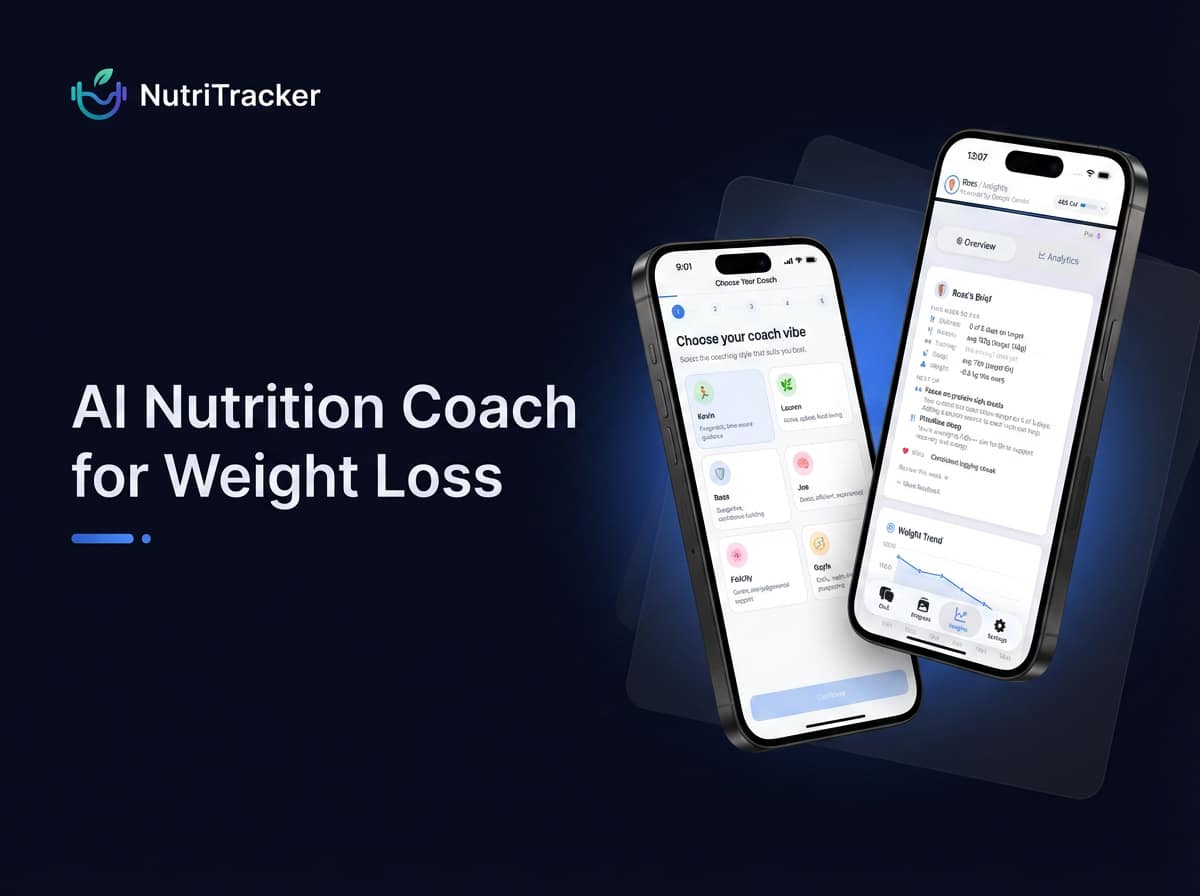
NutriTracker is built for people who want an AI coach for food, fitness, and real life.
It is not designed to be another app that simply logs what happened. It is designed to help you understand what to do next.
NutriTracker focuses on:
- Chat-first AI coaching
- Food, fitness, and habit support in one place
- Six different coach personalities
- Memory across conversations
- Apple Health and Health Connect context
- Support for consistency, not perfection
- Guidance after off-days, missed workouts, and messy weeks
The aim is simple: help you keep going when normal fitness plans usually fall apart.
If you are comparing options, these pages may help:
- Best AI coaching apps in 2026
- AI nutrition coach for weight loss
- How to stay consistent with healthy eating
- How NutriTracker works
Who should use an AI fitness coach app?
An AI fitness coach app can be useful if you:
- Know what to do but struggle to stay consistent
- Want support with workouts and nutrition together
- Need help adjusting plans around real life
- Prefer coaching conversations over static dashboards
- Want help getting back on track after missed sessions
- Find traditional tracking apps useful but incomplete
- Want guidance without paying for a personal trainer
It may not be enough if you need in-person form correction, injury rehabilitation, medical nutrition advice, or specialist programming for a competitive sport. In those cases, a qualified professional is the right move.
The bottom line
The best AI fitness coach app is not the one with the most features. It is the one that helps you take action consistently.
Good coaching should help you understand your next step, adapt when things go wrong, and build habits that fit your life.
If you want detailed workout logging, a tracker may be enough. If you want support with food, fitness, habits, and consistency, an AI fitness coach app may be a better fit.
Because in the end, fitness progress is not built from perfect plans. It is built from repeatable decisions, useful adjustments, and not giving up every time life gets mildly chaotic.
FAQs about AI fitness coach apps
What is the best AI fitness coach app?
The best AI fitness coach app is one that provides personalised guidance, remembers your goals, adapts to your routine, supports workouts and nutrition, and helps you stay consistent over time. NutriTracker is built around chat-first AI coaching for food, fitness, and real life.
Can an AI fitness coach app help me lose weight?
Yes, an AI fitness coach app can help with weight loss by supporting consistent habits around food, activity, workouts, and recovery. It does not do the work for you, but it can make the next step clearer and easier to repeat.
Is an AI fitness coach better than a personal trainer?
An AI fitness coach is not better than a personal trainer for hands-on coaching, form correction, or specialist support. But it can be more affordable and available for everyday guidance, habit support, and quick adjustments.
Do AI fitness coach apps create workout plans?
Some AI fitness coach apps can help create or adjust workout plans. The best ones also support the habits around training, such as nutrition, recovery, motivation, and consistency.
Do I need to track calories with an AI fitness coach?
Not always. Some people use calorie tracking, but others make progress through habit-based coaching, balanced meals, portion awareness, activity, and consistency. A good AI fitness coach should support the approach that fits your life.
What should I look for in an AI fitness coach app?
Look for personalisation, memory, workout support, nutrition guidance, health data integration, realistic habit coaching, and a coaching style that feels supportive rather than judgemental.
{ “@context”: “https://schema.org”, “@type”: “FAQPage”, “mainEntity”: [ { “@type”: “Question”, “name”: “What is the best AI fitness coach app?”, “acceptedAnswer”: { “@type”: “Answer”, “text”: “The best AI fitness coach app is one that provides personalised guidance, remembers your goals, adapts to your routine, supports workouts and nutrition, and helps you stay consistent over time. NutriTracker is built around chat-first AI coaching for food, fitness, and real life.” } }, { “@type”: “Question”, “name”: “Can an AI fitness coach app help me lose weight?”, “acceptedAnswer”: { “@type”: “Answer”, “text”: “Yes, an AI fitness coach app can help with weight loss by supporting consistent habits around food, activity, workouts, and recovery. It does not do the work for you, but it can make the next step clearer and easier to repeat.” } }, { “@type”: “Question”, “name”: “Is an AI fitness coach better than a personal trainer?”, “acceptedAnswer”: { “@type”: “Answer”, “text”: “An AI fitness coach is not better than a personal trainer for hands-on coaching, form correction, or specialist support. But it can be more affordable and available for everyday guidance, habit support, and quick adjustments.” } }, { “@type”: “Question”, “name”: “Do AI fitness coach apps create workout plans?”, “acceptedAnswer”: { “@type”: “Answer”, “text”: “Some AI fitness coach apps can help create or adjust workout plans. The best ones also support the habits around training, such as nutrition, recovery, motivation, and consistency.” } }, { “@type”: “Question”, “name”: “Do I need to track calories with an AI fitness coach?”, “acceptedAnswer”: { “@type”: “Answer”, “text”: “Not always. Some people use calorie tracking, but others make progress through habit-based coaching, balanced meals, portion awareness, activity, and consistency. A good AI fitness coach should support the approach that fits your life.” } }, { “@type”: “Question”, “name”: “What should I look for in an AI fitness coach app?”, “acceptedAnswer”: { “@type”: “Answer”, “text”: “Look for personalisation, memory, workout support, nutrition guidance, health data integration, realistic habit coaching, and a coaching style that feels supportive rather than judgemental.” } } ] }Want an AI coach for food, fitness, and real life?
NutriTracker helps you build better habits, stay consistent, and recover from off-days without turning your health into another dashboard you ignore.
Start freeWho this is for
Readers comparing AI fitness apps.
How NutriTracker helps
It starts with a coach match and continues in app.
What makes it different
It connects training with broader habit support.
| Decision factor | Why it matters | NutriTracker angle |
|---|---|---|
| Continuity | Coaching improves when context carries forward | Memory and repeated check-ins |
| Start path | Users need confidence before signup | Find Your Coach quiz |
Related NutriTracker guides
For general context, see NHS guidance on healthy eating and physical activity. NutriTracker provides coaching support and is not a medical device, diagnostic tool, or clinical treatment.
FAQs
What matters most?
A useful AI fitness app should help users act, adapt, and return, not only generate workouts.
Does NutriTracker diagnose injuries?
No. It is not a medical or injury diagnosis tool.
Summary
NutriTracker fits users who value coaching context and conversation over a static exercise library.