
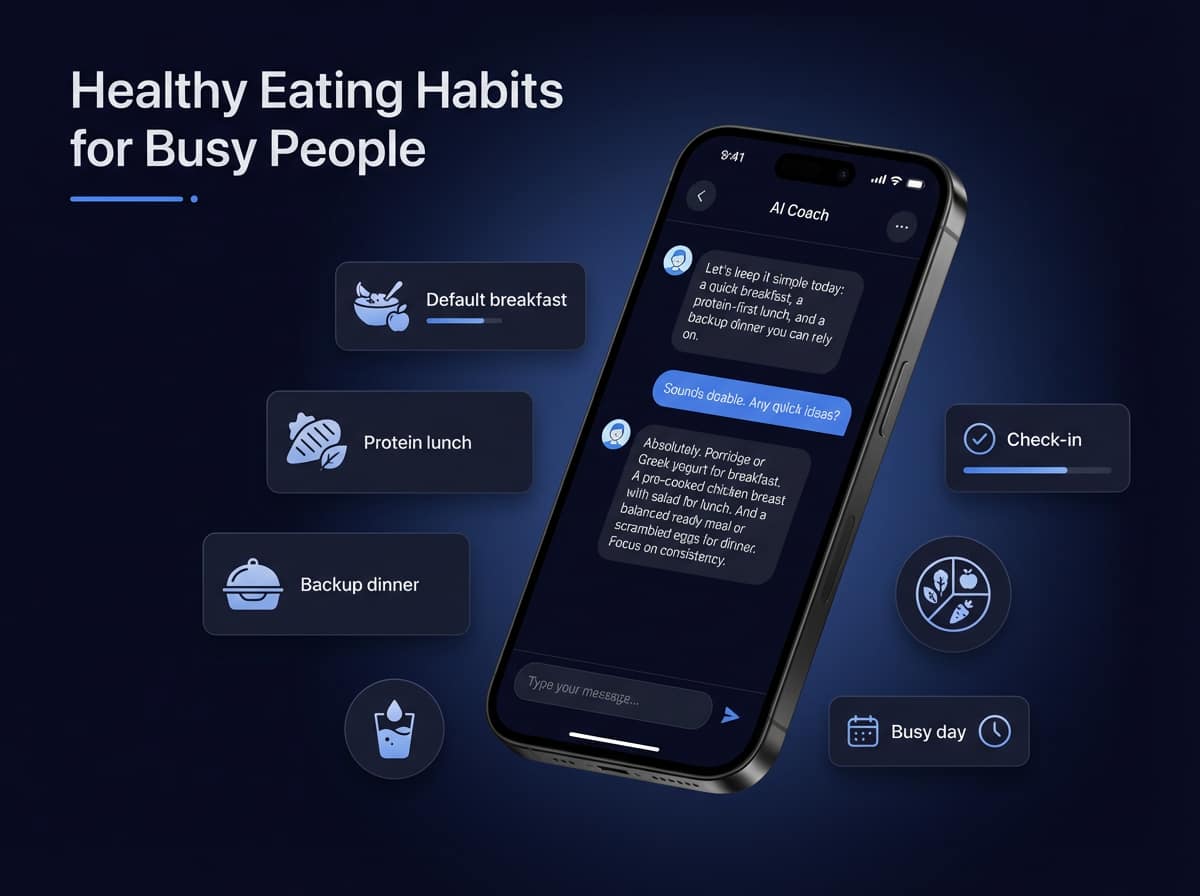
The best healthy eating habits for busy people are simple, repeatable defaults that reduce decision fatigue. Focus on protein at most meals, reliable meal anchors, easy backup dinners, simple snacks, hydration, realistic portions, and quick recovery after off-days instead of trying to eat perfectly every day.
Healthy eating habits for busy people include:
- Use a reliable breakfast or lunch default
- Eat protein at most meals
- Keep simple backup meals ready
- Use the plate method instead of tracking everything
- Plan snacks before you get too hungry
- Drink water with meals
- Recover quickly after off-days
- Make healthy eating easier, not perfect
Busy people do not need complicated nutrition plans
If you are busy, healthy eating can quickly become another thing on the list.
Work. Meetings. Family. Commuting. Training. Messages. Emails. Life admin. Then suddenly it is 7:43pm, you are hungry, tired, and trying to decide whether cereal counts as dinner if you eat it with enough confidence.
This is where most nutrition advice falls apart.
It sounds good when your week is calm. Meal prep every Sunday. Cook fresh meals. Track everything. Avoid takeaways. Eat mindfully. Plan every snack. Lovely stuff.
But busy people need healthy eating habits that work when the day is messy, not just when everything goes perfectly.
The goal is not to eat perfectly. The goal is to make better choices easier to repeat.
Why healthy eating feels harder when you are busy
Healthy eating is not just about knowledge. Most people know the basics.
Eat more protein. Eat more fruit and vegetables. Drink water. Cook at home more often. Do not let stress turn every evening into a snack-based emergency meeting.
The hard part is doing those things consistently when time, energy, and planning are limited.
Busy people often struggle because of:
- Decision fatigue
- Skipped meals
- Last-minute food choices
- Work lunches with limited options
- Evening tiredness
- Stress eating
- No backup meals at home
- All-or-nothing thinking after one off-plan choice
That means the solution is not usually more rules. It is better defaults.
What are healthy eating defaults?
Healthy eating defaults are simple choices you repeat often enough that they become your normal routine.
They are not strict meal plans. They are reliable options that reduce decision-making.
Examples include:
- A breakfast you can make in five minutes
- A work lunch you can repeat without getting bored
- A protein snack you keep available
- A backup dinner for late finishes
- A simple rule for building balanced plates
- A recovery plan after takeaways or social meals
Defaults are powerful because they remove the need to make a fresh decision every time you are hungry.
When the healthy choice is easier, you are more likely to make it.
Healthy eating habits for busy people
If you want healthy eating to fit around real life, start with habits that are simple enough to survive busy weeks.
1. Build one reliable breakfast
Breakfast does not need to be perfect, but having one reliable option can make the day much easier.
A good busy-person breakfast should be:
- Quick
- Filling
- Easy to repeat
- Built around protein where possible
Good options include:
- Greek yoghurt with berries and oats
- Eggs on toast
- Protein porridge
- Overnight oats
- A smoothie with Greek yoghurt or protein powder
- Cottage cheese on toast
The point is not to create a breakfast masterpiece. The point is to avoid starting the day with no plan and then trying to make sensible food decisions while running on coffee and mild panic.
2. Use a protein anchor at lunch
Lunch is where busy days often go sideways.
You get pulled into meetings, eat late, grab whatever is nearby, or end up with a meal that leaves you hungry again an hour later.
A simple fix is to use a protein anchor.
That means choosing lunch around a clear protein source first:
- Chicken
- Tuna
- Eggs
- Beans or lentils
- Turkey
- Greek yoghurt
- Tofu
- Cottage cheese
Then add vegetables, salad, carbohydrates, and some fat around it.
For example:
- Chicken wrap with salad
- Tuna jacket potato
- Eggs on toast with spinach
- Lentil soup with bread
- Turkey sandwich with fruit
- Tofu rice bowl
Protein helps keep you fuller, which makes the afternoon less likely to become a snack safari.
3. Keep two backup dinners ready
Busy people need backup dinners.
Not because you are failing. Because life happens, and future-you deserves better than standing in the kitchen at 9pm negotiating with a frozen pizza.
A good backup dinner should be:
- Fast
- Low effort
- Balanced enough
- Made from ingredients you usually have
Examples include:
- Eggs, toast, and spinach
- Microwave rice, chicken, and frozen vegetables
- Jacket potato with tuna or beans
- Stir fry with prawns, noodles, and frozen veg
- Greek yoghurt, oats, berries, and nuts
- Soup with bread and added protein
Backup meals stop busy days becoming lost days.
4. Use the plate method instead of tracking everything
If you are busy, logging every calorie may not be realistic. That does not mean you have to guess wildly.
The plate method gives you a simple structure:
- One-third protein: chicken, fish, eggs, tofu, beans, lentils, turkey, Greek yoghurt, or cottage cheese
- One-third vegetables or salad: fresh, frozen, roasted, steamed, or raw
- One-third carbohydrates: rice, pasta, potatoes, bread, couscous, wraps, oats, or sweet potatoes
Add a small amount of fat, such as olive oil, avocado, cheese, nuts, seeds, or butter.
This is not precise, but it is practical. And practical usually beats perfect when your schedule is already full.
5. Plan snacks before you are starving
Snacking is not automatically bad. Random, desperate snacking is usually the issue.
If you regularly get hungry in the afternoon, plan for it.
Useful snacks include:
- Greek yoghurt
- Fruit and nuts
- Protein bar
- Hummus and vegetables
- Cottage cheese
- Boiled eggs
- Cheese and crackers
A planned snack can stop you arriving at dinner so hungry that you eat the first thing you see and then somehow also the second and third thing. A classic.
6. Drink water with meals
Hydration does not need to become a full personality.
You do not need a giant motivational bottle with time markers and emotional support quotes. Unless you like that, in which case, excellent hydration theatre.
A simple habit works well:
Drink water with meals.
That gives you several natural reminders across the day without needing to track every glass.
You can also add:
- A glass of water when you wake up
- A drink before coffee
- A bottle on your desk
- Water between alcoholic drinks
Simple, boring, useful. The holy trinity of habits that actually stick.
7. Make healthy food visible and easy
Environment matters.
If the easiest food in your kitchen is crisps, biscuits, and things that require no preparation, those will probably win when you are tired.
Make healthier options easier to choose:
- Keep fruit visible
- Put Greek yoghurt where you can see it
- Keep frozen vegetables available
- Store protein snacks somewhere obvious
- Keep easy meal ingredients stocked
- Put backup meals on your shopping list
This is not about banning anything. It is about making the useful choice less annoying.
8. Recover quickly after off-days
Busy weeks will include imperfect meals. That is normal.
The important thing is not to turn one imperfect meal into a full reset cycle.
If you have a takeaway, a stressful snack-heavy day, or a bigger meal than planned, the best next step is boring:
- Drink some water
- Eat a normal balanced meal next
- Get some movement if you can
- Avoid skipping meals to compensate
- Return to your usual routine
No punishment. No dramatic restart. No waiting until Monday.
Healthy eating is easier when recovery is part of the plan.
Healthy eating for busy people vs perfect meal planning
Busy people often do better with flexible defaults than strict meal plans.
| Perfect meal planning | Healthy eating defaults |
|---|---|
| Requires detailed planning | Uses repeatable simple choices |
| Often works best in calm weeks | Works better in messy weeks |
| Can collapse after one missed meal | Allows quick recovery |
| Needs more decision-making | Reduces decision fatigue |
| Can feel restrictive | Leaves room for flexibility |
| Focuses on exact meals | Focuses on useful habits |
Perfect meal planning can work for some people. But if your routine changes constantly, simple defaults are often easier to maintain.
A simple day of healthy eating for a busy person
Here is what a realistic day could look like without tracking everything or cooking from scratch every few hours:
- Breakfast: Greek yoghurt with oats, berries, and a few nuts
- Mid-morning: coffee and water
- Lunch: chicken wrap with salad and fruit
- Afternoon snack: protein bar or hummus with vegetables
- Dinner: microwave rice, prawns or tofu, and frozen stir fry vegetables
- Evening: tea and something small if you actually want it
No complicated plan. No perfect macros. No spreadsheet. Just enough structure to make the day work.
How to eat healthy when you have no time
When you have no time, lower the friction.
Use meals that are easy to assemble, not meals that require you to become a different person.
Fast options include:
- Rotisserie chicken with microwave rice and salad
- Eggs on toast with spinach
- Greek yoghurt with oats and berries
- Tuna jacket potato
- Chicken wrap with pre-made salad
- Soup with added protein
- Tofu stir fry with frozen vegetables
The key is to stop relying on motivation when tired. Make the useful option obvious and available.
How NutriTracker helps busy people eat better
NutriTracker is built for people who want support with food, fitness, and real life. Not perfect life. Actual life.
That makes it useful if you are busy, inconsistent, tired of tracking everything, or stuck in a loop of starting strong and falling off when the week gets messy.
NutriTracker can help with:
- Chat-first AI coaching
- Healthy eating habits that fit your routine
- Simple meal ideas and nutrition guidance
- Support after off-days
- Different coach personalities
- Memory across conversations
- Food, fitness, and habit support in one place
The aim is not to make healthy eating more complicated. The aim is to help you make better choices more often, even when your week is busy.
If you are building healthier routines, these pages may also help:
- How to stay consistent with healthy eating
- Calorie tracking alternative
- Fitness coaching for busy professionals
- AI nutrition coach for weight loss
Who this approach is best for
These healthy eating habits are useful if you:
- Have a busy schedule
- Struggle with last-minute food choices
- Do not want to track every meal
- Need simple defaults rather than strict meal plans
- Often skip meals and snack later
- Want to eat better without chasing perfection
- Need habits that survive normal life
If you need medical nutrition advice, eating disorder support, or condition-specific diet planning, it is worth speaking to a qualified healthcare professional or registered dietitian.
The bottom line
Healthy eating habits for busy people need to be simple enough to repeat.
You do not need a perfect meal plan. You need reliable defaults, protein anchors, backup meals, planned snacks, basic hydration, and a way to recover after imperfect days.
The best habit is not the one that looks impressive online. It is the one that still works when you are busy, tired, and trying to get through a normal week.
Make healthy eating easier. Then repeat it.
FAQs about healthy eating habits for busy people
What are the best healthy eating habits for busy people?
The best healthy eating habits for busy people include eating protein at most meals, keeping simple backup meals ready, using the plate method, planning snacks, drinking water with meals, and recovering quickly after off-days.
How can I eat healthy when I am busy?
You can eat healthy when busy by using repeatable meal defaults, keeping easy ingredients available, choosing protein-based meals, and planning simple backup options for late finishes or stressful days.
What is the easiest healthy meal for busy people?
Easy healthy meals for busy people include eggs on toast with spinach, Greek yoghurt with oats and berries, chicken wraps with salad, tuna jacket potatoes, and stir fry with frozen vegetables and a protein source.
Do I need to meal prep to eat healthy?
No, you do not need to meal prep everything to eat healthy. Meal prep can help, but simple defaults, backup meals, and repeatable food habits can work just as well for many busy people.
How do I stop eating badly when I am busy?
To stop eating badly when busy, reduce decision fatigue. Keep easy healthy options available, plan one or two reliable meals, avoid skipping meals, and use backup dinners for late or stressful days.
Can an AI nutrition coach help busy people eat healthier?
Yes, an AI nutrition coach can help busy people eat healthier by suggesting realistic meals, supporting habit change, helping with recovery after off-days, and adapting guidance around a busy routine.
Want healthy eating support that fits real life?
NutriTracker gives you an AI coach for food, fitness, and real life, helping you build simple habits, make better choices, and stay consistent when your week gets busy.