
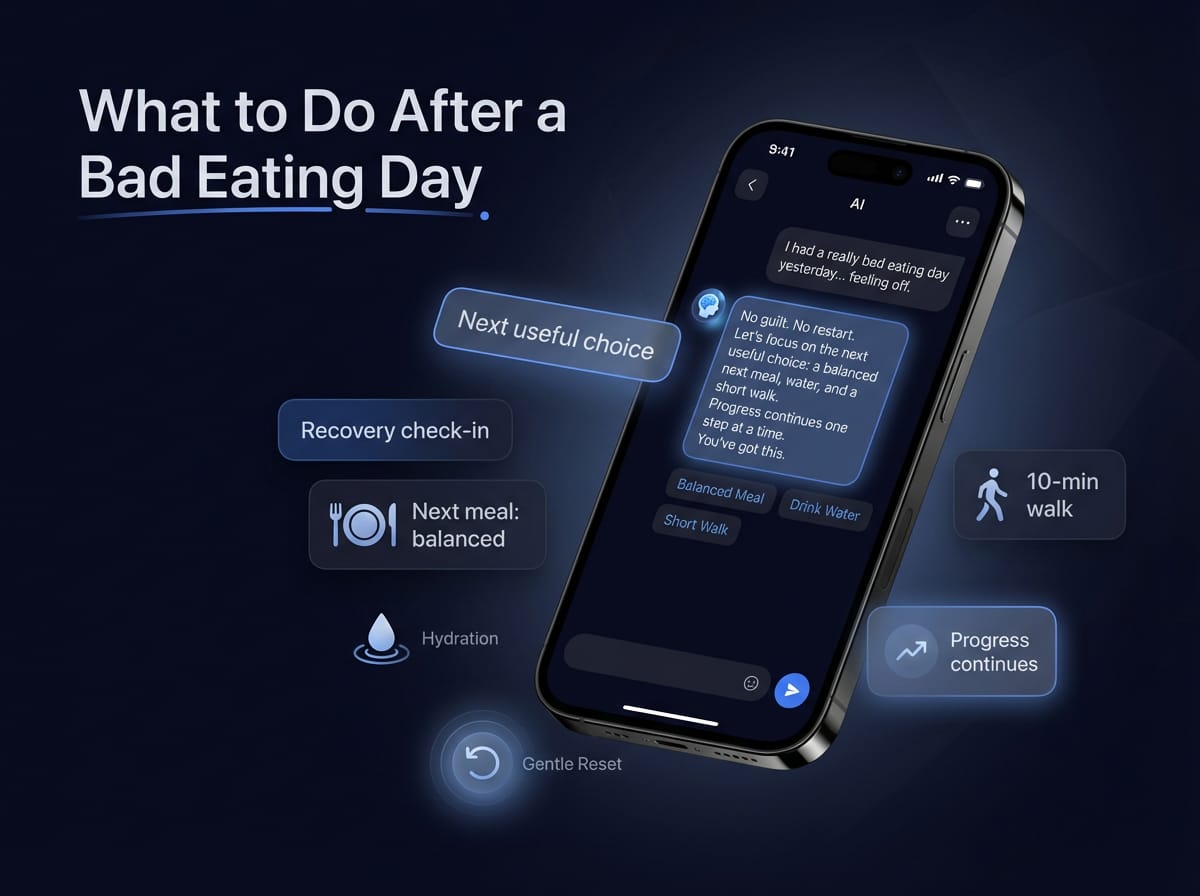
After a bad eating day, the best thing to do is return to your normal routine at the next meal. Do not punish yourself, skip meals, over-restrict, or wait until Monday to start again. Drink water, eat a balanced meal, get some gentle movement if you can, and focus on the next useful choice.
After a bad eating day, you can recover by:
- Stopping the all-or-nothing spiral
- Drinking water and getting back to normal hydration
- Eating a normal balanced meal next
- Avoiding extreme restriction or punishment
- Getting a walk or gentle movement if it helps
- Looking at what caused the day to go off track
- Returning to your usual routine without waiting for Monday
One bad eating day does not ruin your progress
Everyone has days where eating does not go to plan.
Maybe you had a takeaway, snacked more than usual, ate past fullness, drank more than planned, skipped meals then raided the kitchen, or simply had one of those days where every decision was powered by stress and convenience.
That does not mean you have failed.
One bad eating day does not ruin your progress. The bigger issue is what happens after it.
If one bad day turns into guilt, restriction, giving up, and waiting for Monday, that is where the cycle starts. But if you recover calmly and get back to normal quickly, it becomes just one imperfect day.
And one imperfect day is not a disaster. It is just data with a bit of sauce on it.
Why people panic after a bad eating day
Most people do not struggle because of one off-plan day. They struggle because of the meaning they attach to it.
A bad eating day can quickly turn into thoughts like:
- I have ruined everything
- I have no discipline
- I may as well keep going
- I need to start again tomorrow
- I will restart properly on Monday
- I need to make up for this
That kind of thinking creates a bigger problem than the food itself.
Instead of helping you recover, it pushes you into the all-or-nothing cycle. You are either perfectly on plan or completely off it. There is no middle ground.
But long-term progress lives in the middle ground.
What to do after a bad eating day
The goal after a bad eating day is not to punish yourself. The goal is to return to normal as quickly and calmly as possible.
1. Do not turn one day into a full reset
The most important thing is to stop the spiral early.
A bad eating day does not need to become a bad week. A takeaway does not need to become a weekend of “I may as well”. One snack-heavy evening does not mean you are back to zero.
Try this rule:
The next choice is the reset.
You do not need a new plan, a new app, a new notebook, a dramatic Monday morning announcement, or a fridge full of vegetables you bought while emotionally overcorrecting.
You just need the next useful choice.
2. Drink water and get back to normal hydration
After a day of heavier eating, salty foods, alcohol, or less routine, you may feel bloated, sluggish, or uncomfortable.
That does not mean you have gained loads of fat overnight. It is often water, salt, food volume, digestion, and normal fluctuation.
Start with something simple:
- Drink water
- Have a normal breakfast or next meal
- Avoid weighing yourself if it will make you spiral
- Do not treat bloating as failure
Hydration is not magic, but it helps you feel more normal again.
3. Eat a normal balanced meal next
This is the big one.
After a bad eating day, many people try to compensate by skipping meals, eating almost nothing, or making the next day painfully strict.
That usually backfires.
Restriction makes you hungrier, more food-focused, and more likely to overeat again later.
A better next meal is normal and balanced:
- A clear protein source
- Vegetables, salad, or fruit
- A sensible portion of carbohydrates
- Some water
- No drama
Examples:
- Eggs on toast with spinach
- Greek yoghurt with oats and berries
- Chicken wrap with salad
- Tuna jacket potato
- Salmon, potatoes, and vegetables
- Tofu stir fry with rice and frozen veg
You are not trying to erase yesterday. You are trying to continue today.
4. Avoid punishment exercise
Movement can help after a bad eating day. Punishment exercise does not.
There is a big difference between:
- Going for a walk because it helps you feel better
- Forcing yourself through a brutal workout because you feel guilty
Choose movement that supports recovery, not movement that tries to pay off food like a debt.
Good options include:
- A walk
- A normal planned workout
- A short mobility session
- Gentle activity that helps you feel human again
If you already had a workout planned, do it if you feel able. If you do not, a walk is enough.
5. Do not slash calories the next day
Trying to compensate aggressively usually keeps the cycle going.
A common pattern looks like this:
- Eat more than planned
- Feel guilty
- Restrict hard the next day
- Get very hungry
- Overeat again
- Feel guilty again
That loop is exhausting.
Instead, aim for your normal routine. Maybe slightly more structure, maybe slightly more awareness, but not punishment.
Normal is the win.
6. Look for the pattern without judging yourself
Once you feel calmer, look at what actually happened.
Not in a harsh way. In a useful way.
Ask:
- Did I skip meals earlier in the day?
- Was I too hungry by the evening?
- Was I stressed, tired, bored, or overwhelmed?
- Was my plan too strict during the week?
- Did I have no easy food available?
- Did one imperfect choice make me think the whole day was ruined?
This is where progress happens.
If you can understand the pattern, you can change the system. If you only judge yourself, you are likely to restart with the same plan and hope harder. Hope is lovely, but it is not much of a strategy.
7. Choose one useful action for today
After a bad eating day, do not try to fix everything at once.
Choose one useful action.
For example:
- Eat protein at breakfast
- Go for a 20-minute walk
- Prepare a simple lunch
- Drink water with meals
- Plan dinner before you get too hungry
- Get back to your normal workout routine
- Go to bed a bit earlier
Small useful actions rebuild momentum.
You do not need a heroic comeback. You need a normal next step.
What not to do after a bad eating day
Some reactions feel productive, but actually make things worse.
| What not to do | Why it does not help | What to do instead |
|---|---|---|
| Skip meals | Can make you overly hungry later | Eat a normal balanced meal |
| Do punishment exercise | Links movement with guilt | Walk or return to normal training |
| Wait until Monday | Turns one day into several lost days | Make the next useful choice now |
| Weigh yourself repeatedly | Can make normal fluctuations feel dramatic | Look at longer-term trends if useful |
| Start a stricter plan | Often leads to another rebound | Return to a sustainable routine |
What to eat after a bad eating day
After a bad eating day, eat something normal, balanced, and satisfying.
Aim for:
- Protein
- Fibre
- Some carbohydrates
- Fruit or vegetables
- Water
Good options include:
- Greek yoghurt with berries and oats
- Eggs on toast with spinach
- Chicken salad wrap
- Tuna jacket potato
- Soup with bread and added protein
- Rice bowl with chicken, tofu, or prawns
- Salmon with potatoes and vegetables
The meal should feel like a return to normal, not a punishment.
Should you weigh yourself after a bad eating day?
You can, but it may not be useful.
After a day of higher food intake, salt, alcohol, or later eating, your weight may temporarily increase. That does not mean you gained a large amount of body fat overnight.
Scale weight can change because of:
- Water retention
- Salt intake
- Carbohydrate intake
- Food still being digested
- Hormonal changes
- Poor sleep
- Stress
If weighing yourself after an off-day makes you panic, skip it. Look at trends over time instead.
One weigh-in is just one data point. It is not a moral judgement from the bathroom floor.
Bad eating day vs bad eating pattern
One bad eating day is not a big problem. A repeated pattern may need attention.
| Bad eating day | Bad eating pattern |
|---|---|
| Happens occasionally | Happens most weeks |
| You recover quickly | You often spiral for days |
| Usually linked to a specific event | Usually linked to routines, stress, or restriction |
| Does not define your progress | May need a better system |
If bad eating days are happening often, do not just blame yourself. Look at the system.
You may need better meal structure, more flexible rules, less restriction, planned snacks, better sleep, stress support, or a coaching approach that helps you recover instead of restart.
How to stop one bad eating day becoming a bad week
The key is to shorten the recovery window.
Instead of waiting for Monday, return to normal at the next meal.
Use this simple recovery script:
- That happened
- It does not need to become a bigger problem
- I do not need to punish myself
- The next useful choice is enough
- I am continuing, not starting over
This might sound simple, but it changes the whole pattern.
You stop treating progress like something that disappears after one imperfect day. You start treating it like something you can keep returning to.
How NutriTracker helps after off-days
NutriTracker is built for people who want support with food, fitness, and real life.
That includes the messy bits. The missed workouts. The snack-heavy evenings. The bad weekends. The “I know what to do, but I did not do it” moments.
NutriTracker can help you:
- Recover after a bad eating day without guilt
- Understand what caused the off-day
- Choose the next useful action
- Build better meal and habit routines
- Get support from different AI coach personalities
- Focus on consistency instead of perfection
- Stop turning one bad day into a full restart
The aim is not to shame you into being better. The aim is to help you continue.
If you are working on recovery and consistency, these pages may also help:
- How to stop restarting your diet every Monday
- How to stay consistent with healthy eating
- Calorie tracking alternative
- AI nutrition coach for weight loss
Who this approach is best for
This approach is useful if you:
- Feel guilty after eating more than planned
- Turn one bad day into a bad week
- Keep restarting every Monday
- Use restriction to compensate after off-days
- Struggle with all-or-nothing thinking
- Want to recover calmly and keep going
- Need support with consistency, not more shame
If eating, restriction, guilt, or body image feels overwhelming, it is worth speaking to a qualified healthcare professional, therapist, or registered dietitian. You deserve proper support, not just another plan.
The bottom line
After a bad eating day, do not start over. Continue.
Drink water. Eat a normal balanced meal. Move gently if it helps. Avoid punishment. Look for the pattern. Choose the next useful action.
One bad day does not erase your progress.
The skill that matters most is not perfection. It is recovery.
FAQs about what to do after a bad eating day
What should I do after a bad eating day?
After a bad eating day, return to your normal routine at the next meal. Drink water, eat a balanced meal, avoid extreme restriction, and focus on the next useful choice instead of starting over.
Should I skip meals after overeating?
No, skipping meals after overeating usually makes things worse. It can increase hunger and lead to another overeating episode. A normal balanced meal is usually a better recovery choice.
Should I exercise after a bad eating day?
You can exercise after a bad eating day if it feels good, but do not use exercise as punishment. A walk, normal workout, or gentle movement can help you feel better without creating guilt.
Will one bad eating day ruin my progress?
No, one bad eating day will not ruin your progress. The bigger issue is turning one bad day into several days of giving up. Returning to normal quickly matters more than being perfect.
What should I eat the day after overeating?
The day after overeating, eat normal balanced meals with protein, fibre, carbohydrates, fruit or vegetables, and water. Do not slash calories or punish yourself with extreme restriction.
How do I stop feeling guilty after a bad eating day?
To stop feeling guilty after a bad eating day, remind yourself that one day does not define your progress. Look at what caused it, choose one useful next action, and return to your routine without punishment.
Need help recovering after off-days?
NutriTracker gives you an AI coach for food, fitness, and real life, helping you recover from messy days, build better habits, and keep going without chasing perfection.